With Katie Jane Taylor, Founder & Creative Director of Katie Perry (The Label), Sydney, Australia
How do you fight a 17-year legal war without losing your soul? For Australian designer Katie Jane Taylor, it meant being a “warrior” in the courtroom and a “soft place to land” at home. While defending her brand, Katie Perry, against a global pop icon, Katie mastered the ultimate duality: hosting kitchen disco parties for her kids while taking calls from lawyers.
In this interview, Katie shares how she built a “spiritual six-pack” to survive a David and Goliath battle, why she refused to let a toxic corporate world break her, and how she continues to design with a heart focused on family and feminine strength.
Can you tell us about yourself and how your passion for fashion first started? What inspired you to pursue this dream?
Fashion has always been part of my story. My great-grandfather was a wool merchant, and my mother worked closely with the Benetton brothers, so I grew up surrounded by an appreciation for textiles, craftsmanship, and the global nature of the industry. My childhood was spent moving between Asia, Europe, and South Africa before eventually settling in Sydney, and that exposure to different cultures and styles shaped how I see fashion today — as something both expressive and deeply personal. I began building my career working as a stylist, manager, and buyer for retailers including Brown’s in London, Oroton, and David Jones. But the passion really started much earlier. At 11 years old, I designed my first outfit for a school dance — an off-the-shoulder top with a matching frill skirt (very 80s, very on-trend at the time!).
From that moment, I knew I wanted to be a designer, but I also understood the importance of learning every part of the industry before launching my own label. Interestingly, it was a challenging experience in a corporate role that ultimately pushed me to take that leap. I had always been surrounded by strong female mentors who lifted me up, but this environment was different — no matter how hard I worked, it never felt like enough. I experienced the toxic side of female competition. It forced me to reconnect with my “why” and the dream I had almost put aside. In hindsight, that experience was a turning point. It gave me the clarity and courage to back myself and start my own label — something I’m incredibly grateful for today.
2.How has your understanding of femininity influenced your designs, and did this perspective evolve throughout the years of facing such a high-profile challenge?
My understanding of femininity has always been grounded in the belief that we are enough, just as we are — and that we matter. That philosophy sits at the heart of my label, and it’s also deeply connected to the legal case I recently won. Over the years, particularly through such a high-profile and often challenging experience, I’ve been very conscious not to become cynical. Instead, that perspective has strengthened my commitment to designing pieces that feel honest, considered, and empowering. My designs have evolved into simple, elevated essentials — clothing that doesn’t overpower the person wearing it, but instead allows them to feel more like themselves. More confident, more at ease, and more aligned with who they are.
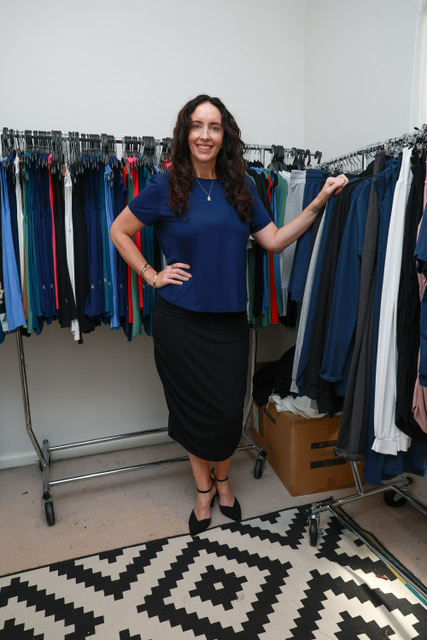
3.What were some of the most difficult personal or professional challenges you faced during the trademark dispute, and how did they shape the woman you are today?
The challenges were both deeply personal and highly public. I went through a brutal cross-examination, experienced online trolling, and carried an immense amount of stress — much of it without the kind of support you would hope for in those moments. Looking back, it also highlighted my own lack of boundaries at the time, and a certain naivety about how intense and consuming the legal system can be. I was trying to hold everything together — running a business, being a mum, and navigating a very public dispute — often all at once. I remember hosting Friday night disco parties with my kids while stepping away to take calls from lawyers. That blend of joy and pressure really defined that period. What it ultimately taught me was the importance of becoming my own advocate. To back myself fully, to trust my voice, and to set clear boundaries — especially around protecting my time and energy with my family. That’s something I would never compromise on now. I often say I’ve come out of it with a “spiritual six-pack.” Running became my outlet — a way to process, reset, and stay strong — and I became much more intentional about surrounding myself with like-minded, supportive people. It was an incredibly challenging chapter, but it shaped me into a stronger, more grounded woman — both in business and in life.
4.How do you juggle motherhood with stressful business moments—what’s your secret to staying balanced through it all?
It is hard — and I don’t think there’s a perfect formula. I’m still working on it every day. There is no balance, that is the myth that we keep being feed. What I have learnt is to let go of the idea that I can do everything perfectly. There are many days when something has to give — I might forget it’s Book Week (that has definitely happened), or a fabric order might run late because I’ve chosen to be at a school assembly. And I’ve come to accept that’s okay. For me, it’s really about redefining what success looks like in this moment, There’s no value in comparing myself or my business to someone who isn’t living my life. I’m incredibly grateful to have the support of my mum . And I’ve also become much more intentional about looking after myself. As mentioned running has been a huge outlet for me; I found a great run group, prioritised my sleep, started tracking my stress, and explored things like EFT tapping. At the end of the day, it’s not about perfect balance — it’s about having the right support around you, backing yourself, and knowing what truly matters in each moment
5.Looking back, what would you say to other women who are chasing their dreams but feel discouraged by obstacles or powerful opposition?
Keep going
Back yourself, and on the days when that feels impossible, surround yourself with people who can do it for you — your cheerleaders really matter. I also used to think about my 80-year-old self. Whenever I felt like giving up, I’d ask, “What would she say to me right now?” And the answer was always to keep going. As a mum, it’s especially important to me that my children see that when things get hard, we don’t just walk away. That having a family doesn’t mean giving up on your dreams. It’s not always easy — but it is possible to do both. Another takeaway is to not to make big decisions when you’re tired, hungry, or overwhelmed. That’s when everything feels harder than it really is!
By Bianca Bonta (Ruta)